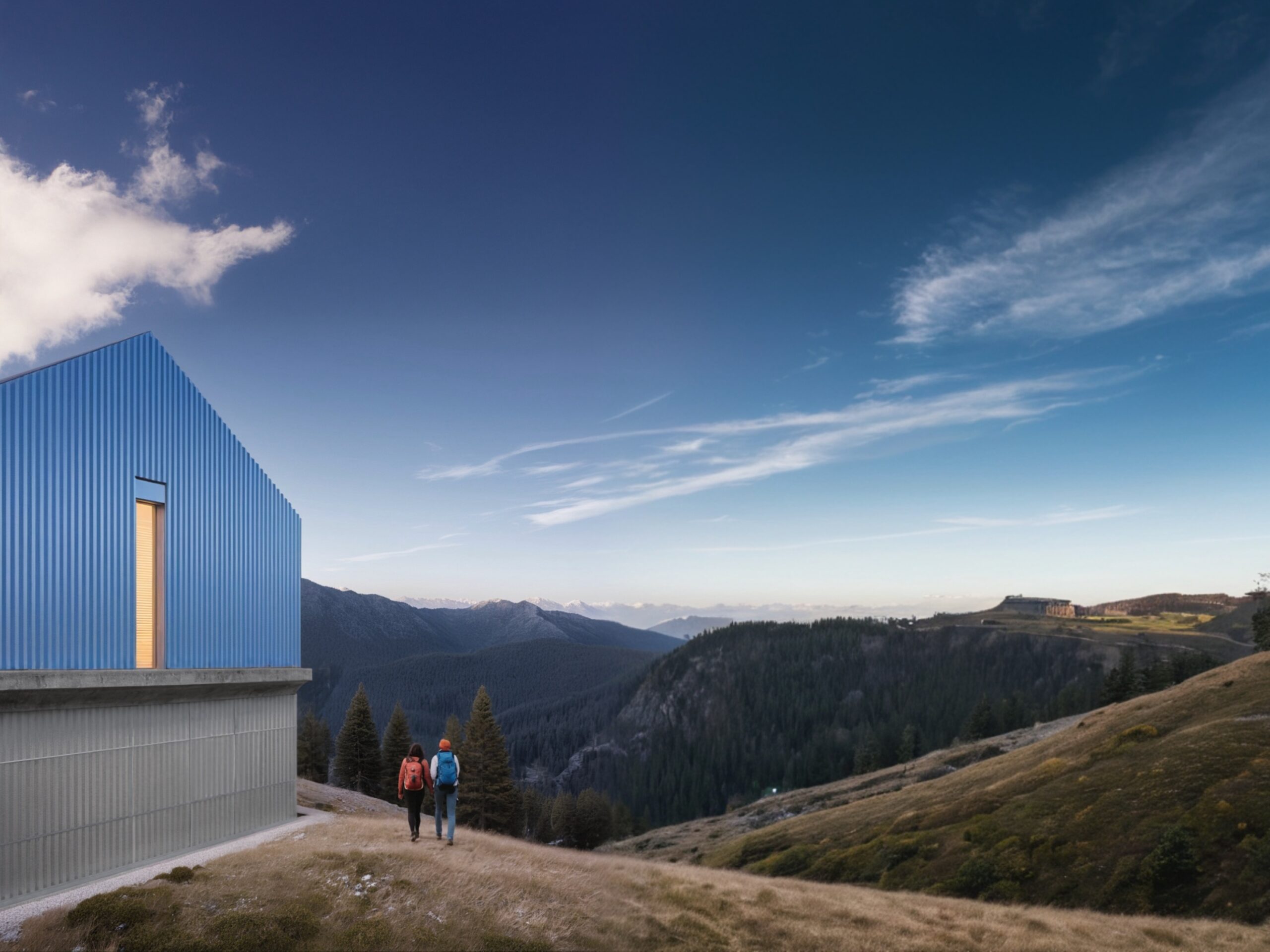
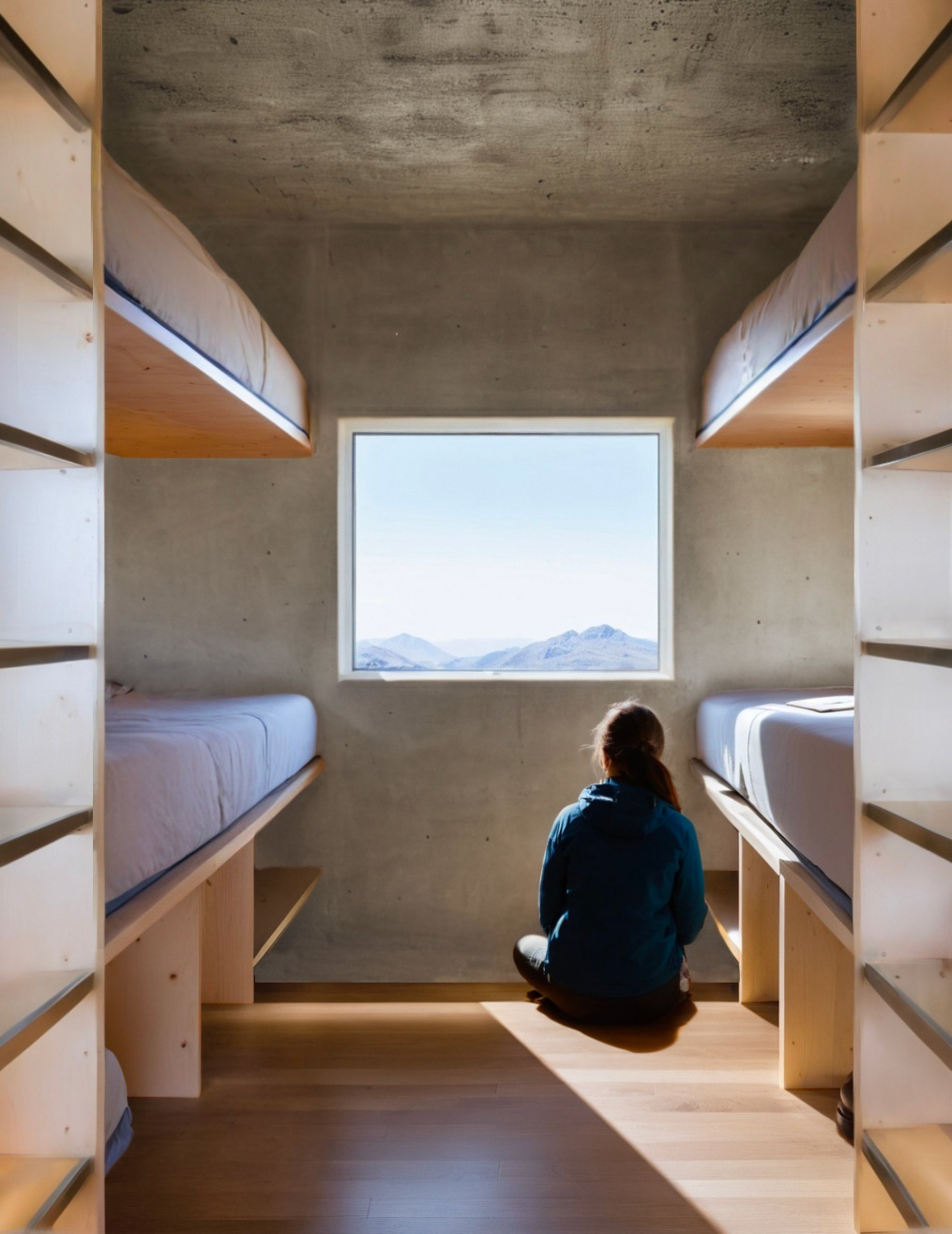
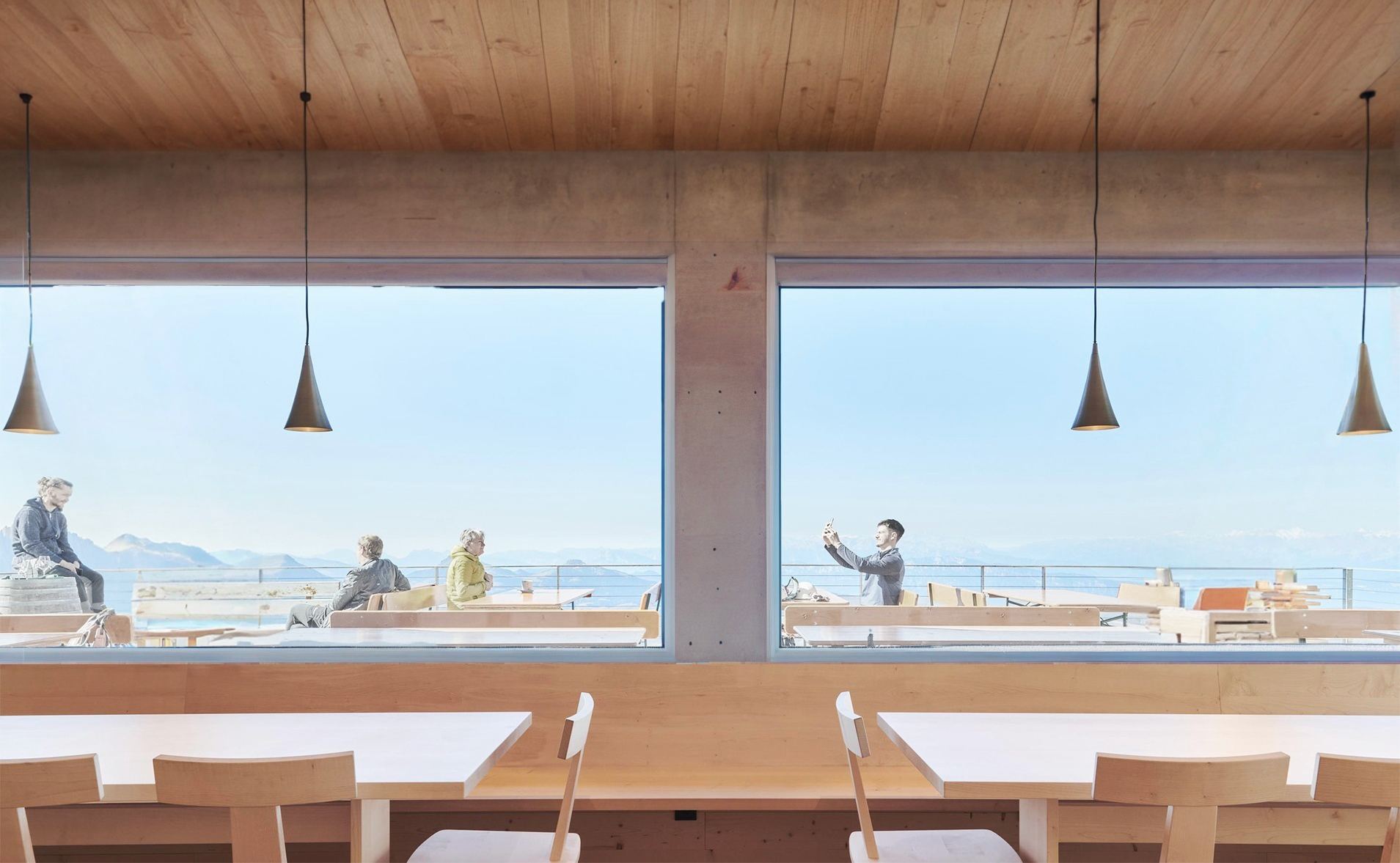
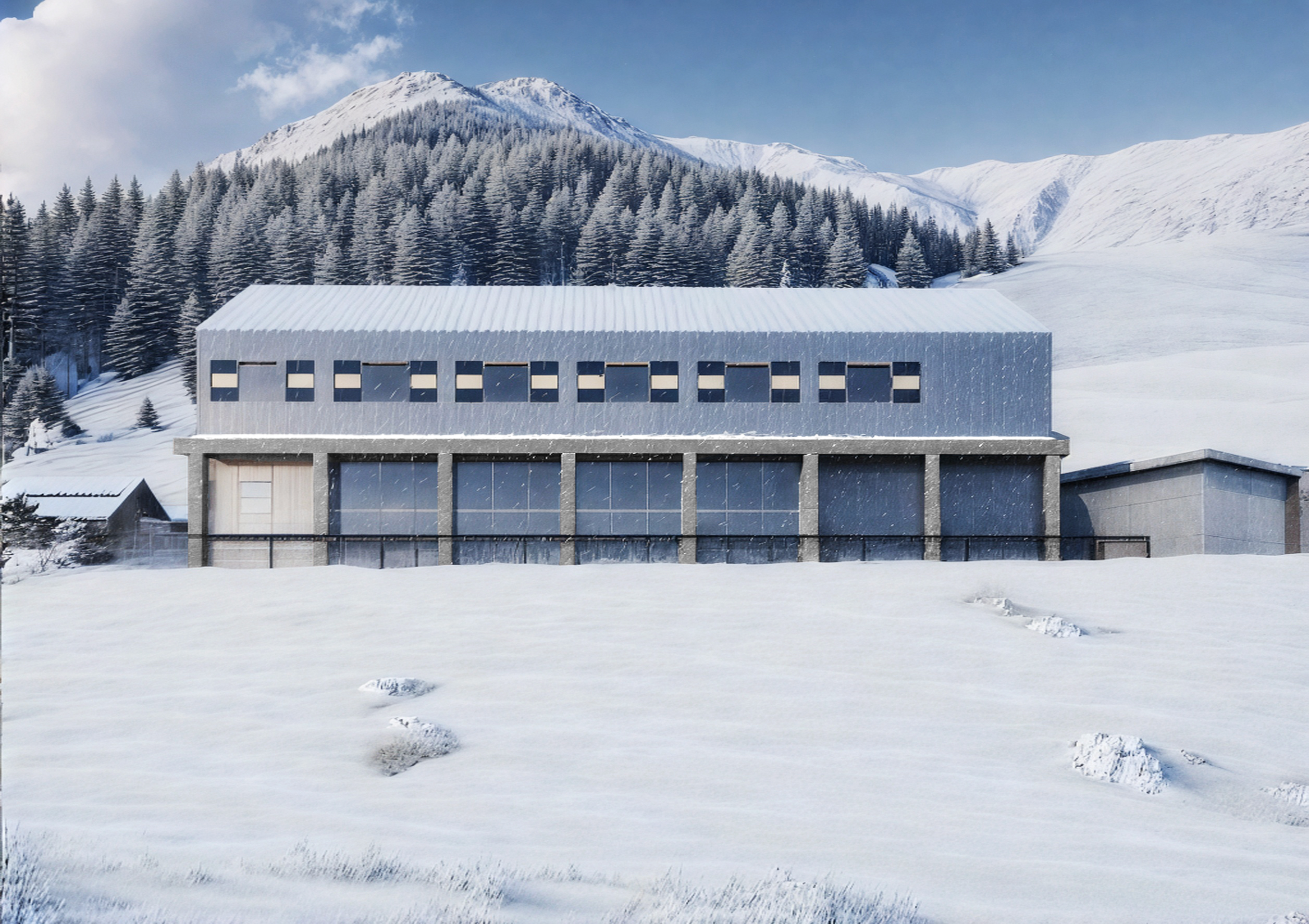
The project for the new Spruggio Alpine Hut “Giovanni Tonini” emerges from the need to reconstruct a structure deeply embedded in the collective memory of the Trentino hiking community, while addressing contemporary functional, environmental, and energy requirements. The previous refuge, destroyed by fire in 2016, was a significant landmark—not only for its strategic location along the European long-distance path E5, but also for the simplicity and authenticity of its architecture. The proposal reinterprets the notion of the alpine hut through a contemporary lens, balancing vernacular tradition, technological innovation, and environmental responsibility.
Form as an Expression of Alpine Language – The generative idea of the project is rooted in a reinterpretation of traditional alpine “malga” architecture, characterized by its clear vertical stratification: a solid, grounded base—typically in stone—dedicated to productive functions and shelter, and a lighter upper level in timber, reserved for dwelling. Within the project, this material hierarchy is abstracted and translated into a contemporary architectural language through the use of two strongly expressive materials: exposed concrete at the base, anchoring the building to the terrain with a sense of permanence and mass, and aluminum for the upper volume—a lightweight, durable, and reflective skin that engages with light and the changing conditions of the surrounding mountain landscape.